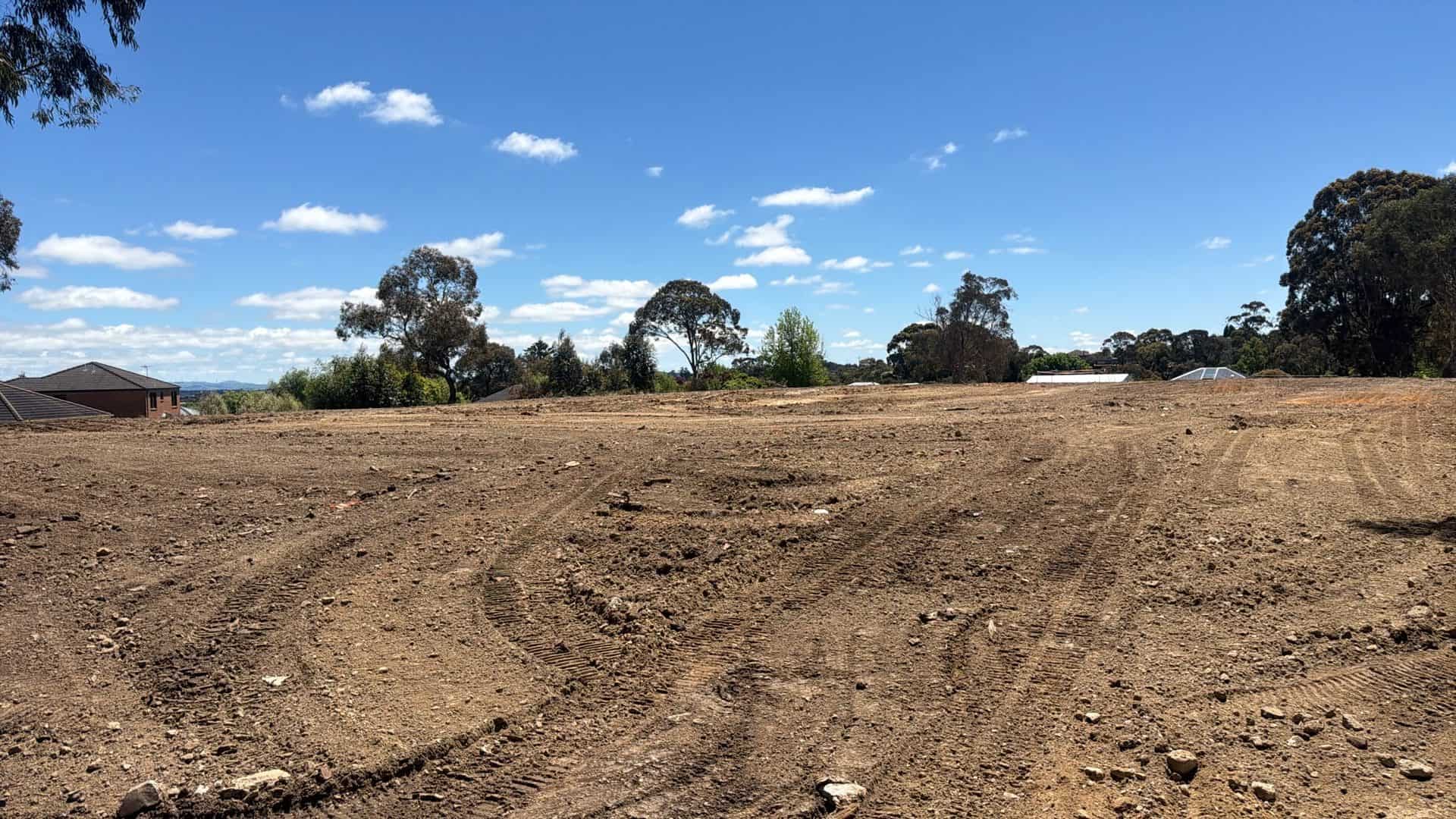
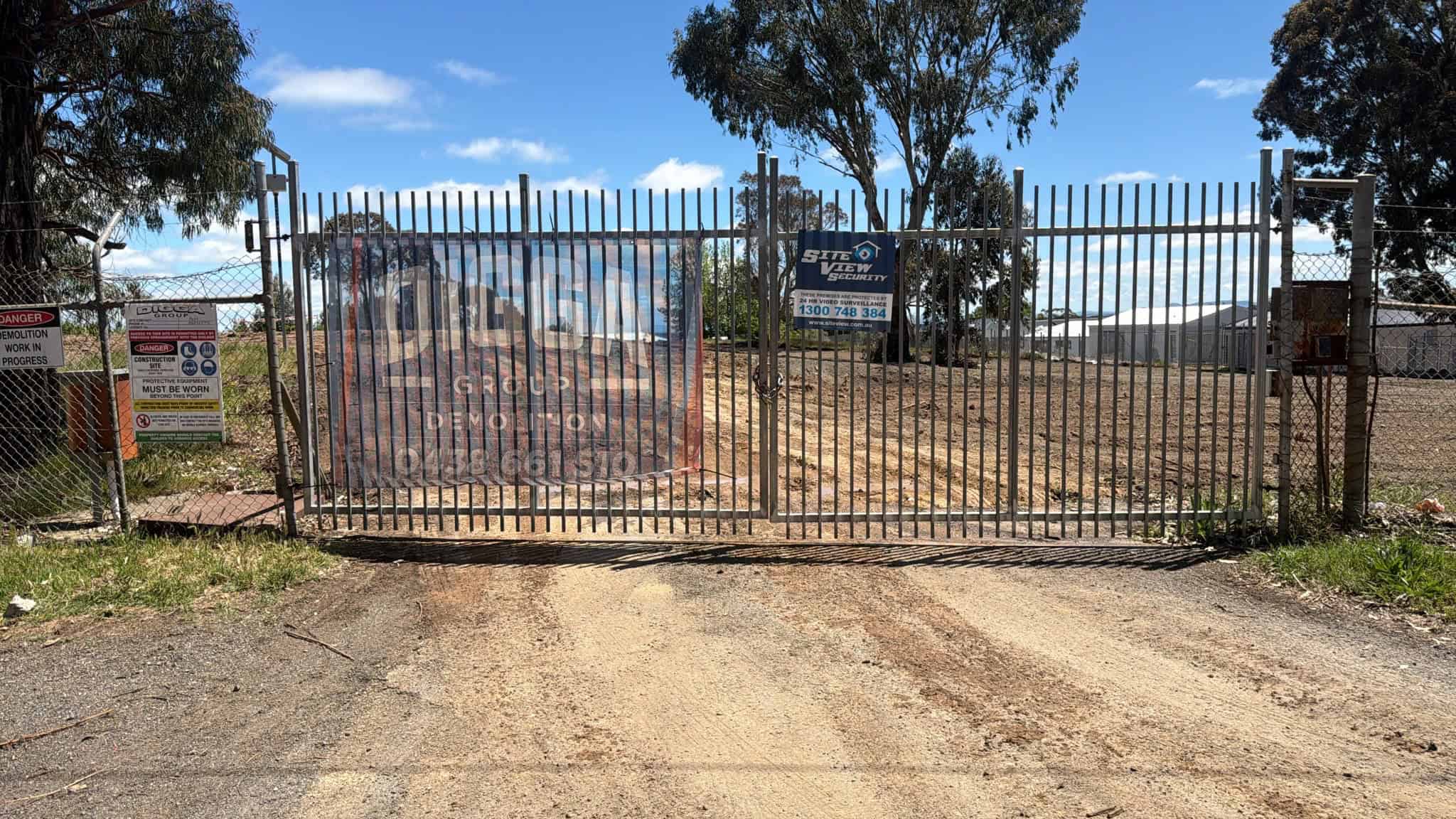
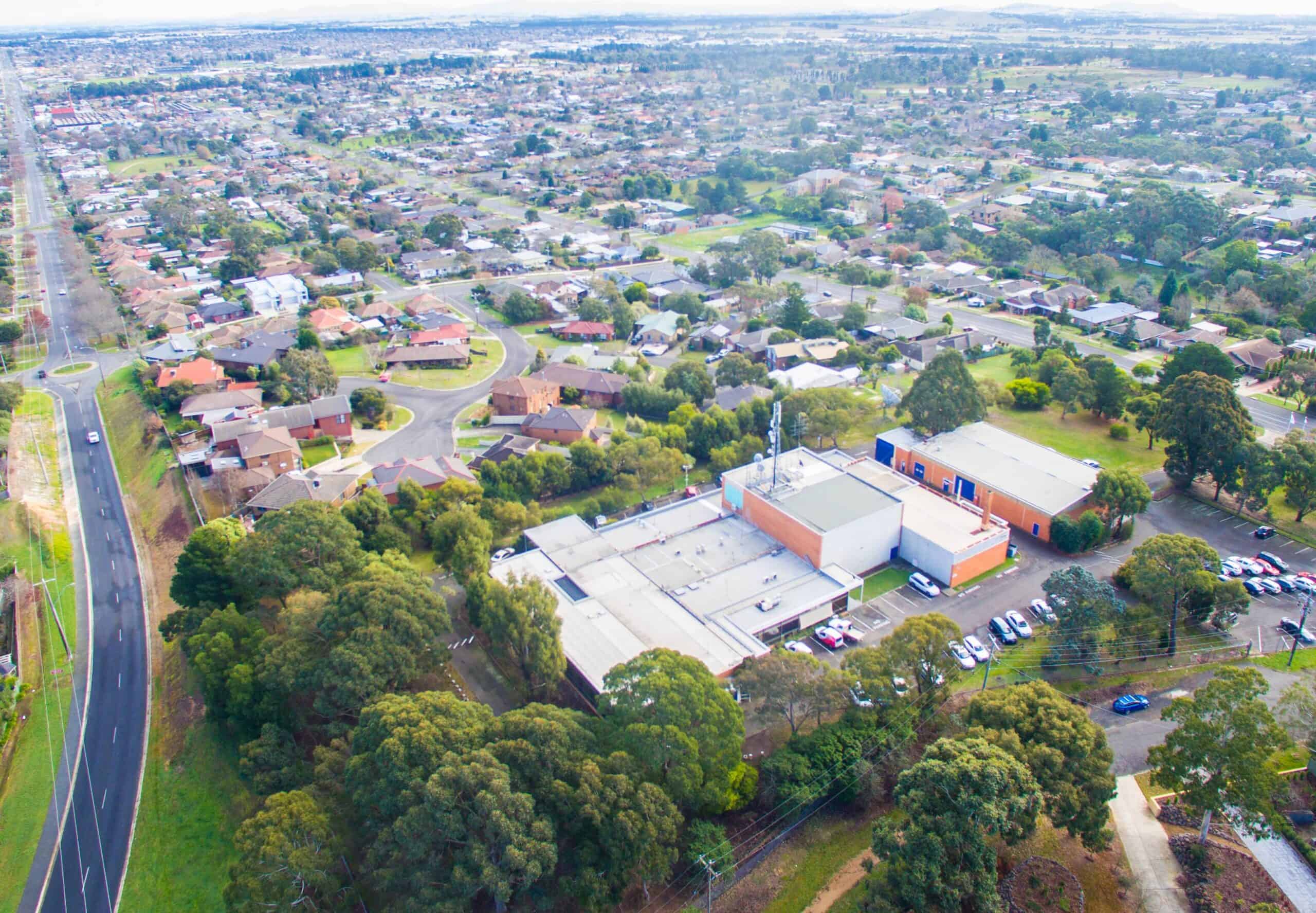
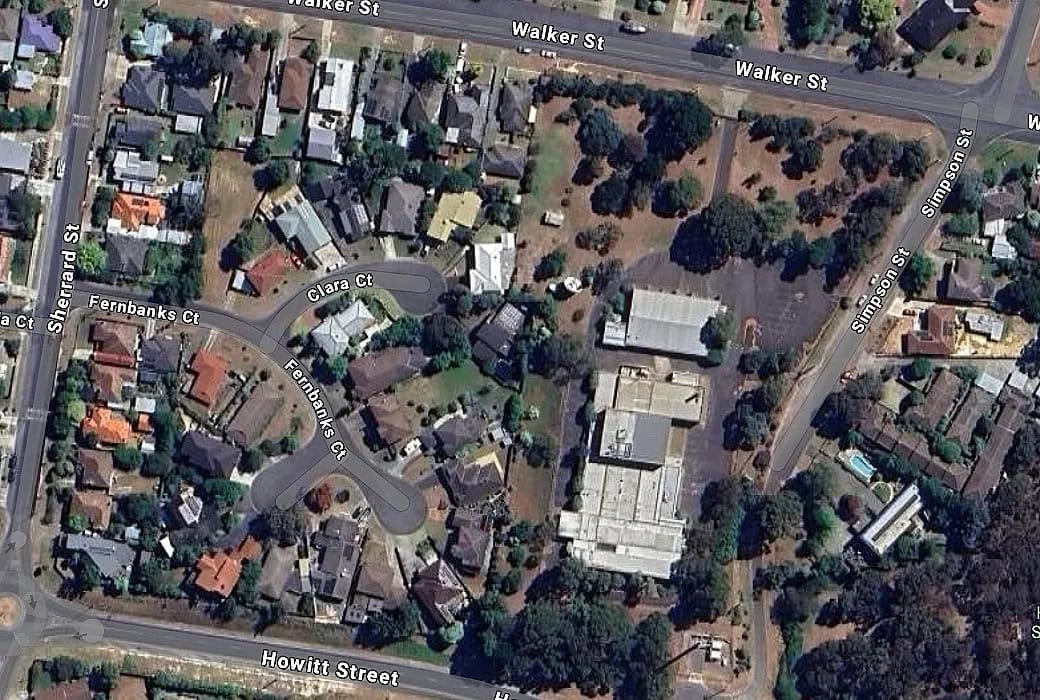
Digga Group was engaged to deliver the complete demolition and site clearance of the former WIN Television studios at 207 Walker Street, Ballarat North, on behalf of a builder with whom we share a long and valued working relationship. Having delivered numerous projects together over the years, the client entrusted Digga Group with managing this significant site from start to finish. Working across a 2.1-hectare commercial site, our team managed every stage of the project, from service abolishments and hazardous materials removal through to demolition, resource recovery and final clearance, returning a clean, level site ready for redevelopment.
Site history
The Walker Street site was home to BTV-6, Ballarat’s first commercial television station, which commenced broadcasting at 7pm on Friday, 27 April 1962. For more than five decades the studios produced regional news and local programming, including the long-running variety program Six Tonight and the Logie Award-winning children’s series Kids Only. The station joined VIC TV in 1989 and was acquired by WIN Television in 1994.
Following the relocation of WIN’s Victorian news production in 2016, the facility was decommissioned and the land was later sold for residential redevelopment. The demolition of the studio complex marks the close of a significant chapter in Ballarat’s media history.
Project overview
| Client | Private builder – a long-standing Digga Group partner |
| Location | 207 Walker Street, Ballarat North VIC |
| Duration | August – October 2026 (approximately 9 weeks) |
| Site area | Approximately 2.1 hectares |
| Labour | In excess of 1,070 man-hours |
| Material recovered | Approximately 2,750 tonnes – 97% recycled (excluding asbestos waste) |
| Services delivered | Service abolishments, hazardous materials removal, demolition, resource recovery and site clearance |
Scope of works
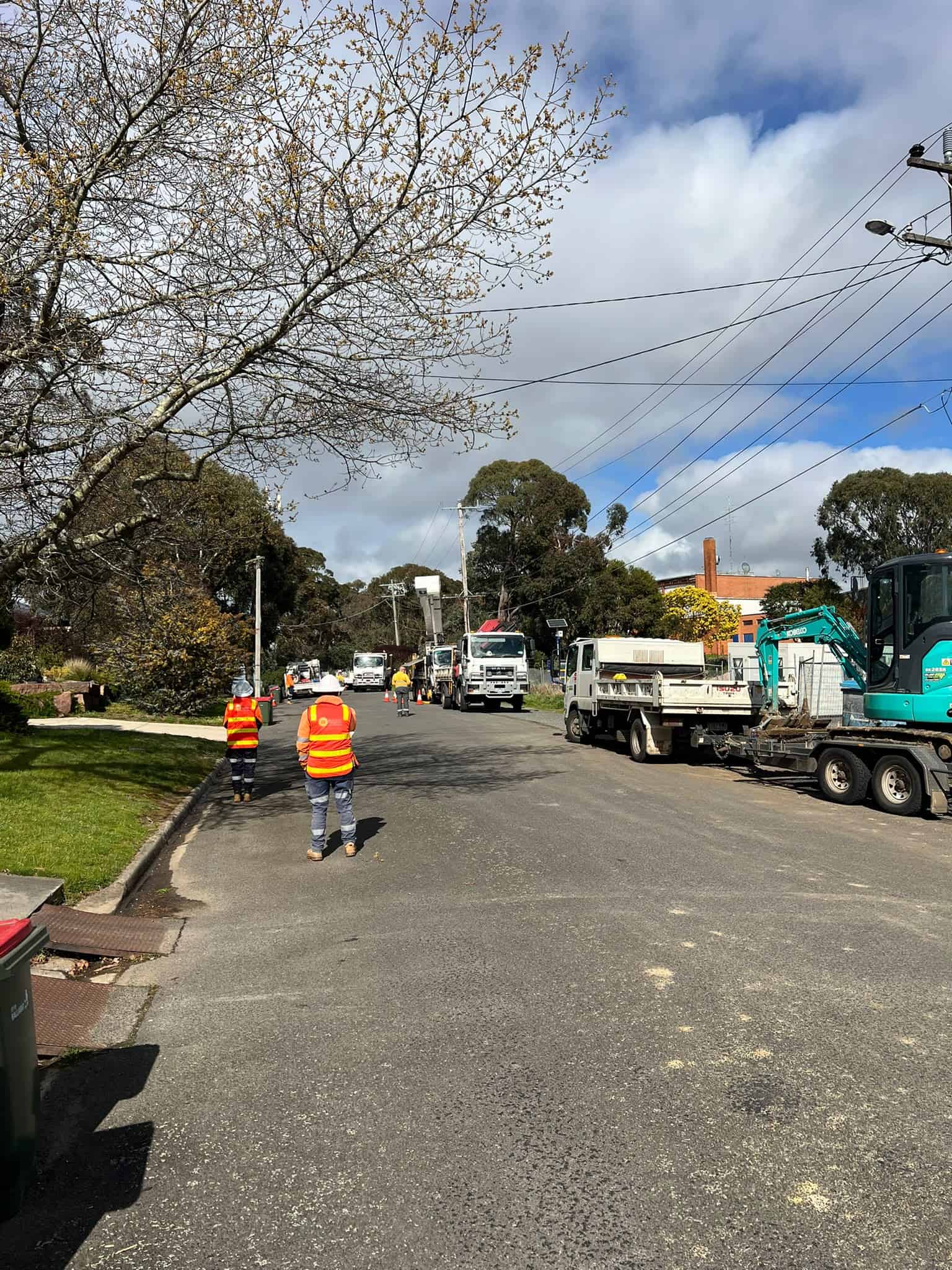
- Service abolishments – Liaison with Powercor and the gas distributor to plan and coordinate the abolishment of all site services, including the decommissioning of the on-site Powercor substation.
- Hazardous materials – Division 6 hazardous materials audit, followed by the licensed removal of friable and non-friable asbestos under independent air monitoring, with clearance certificates issued prior to demolition.
- Soft strip and salvage – Removal of internal fit-out, plant and fixtures, with copper and other metals recovered for recycling.
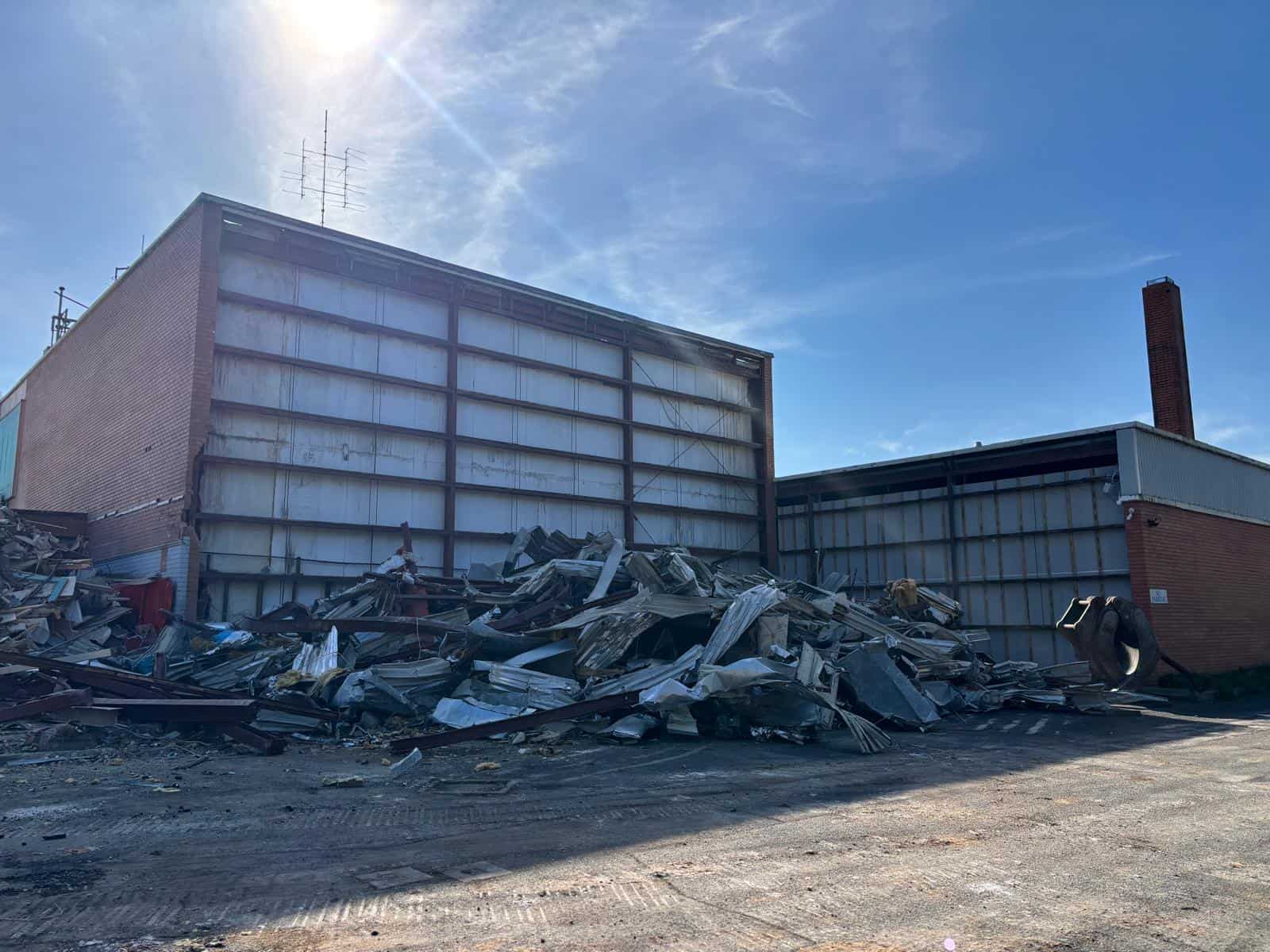
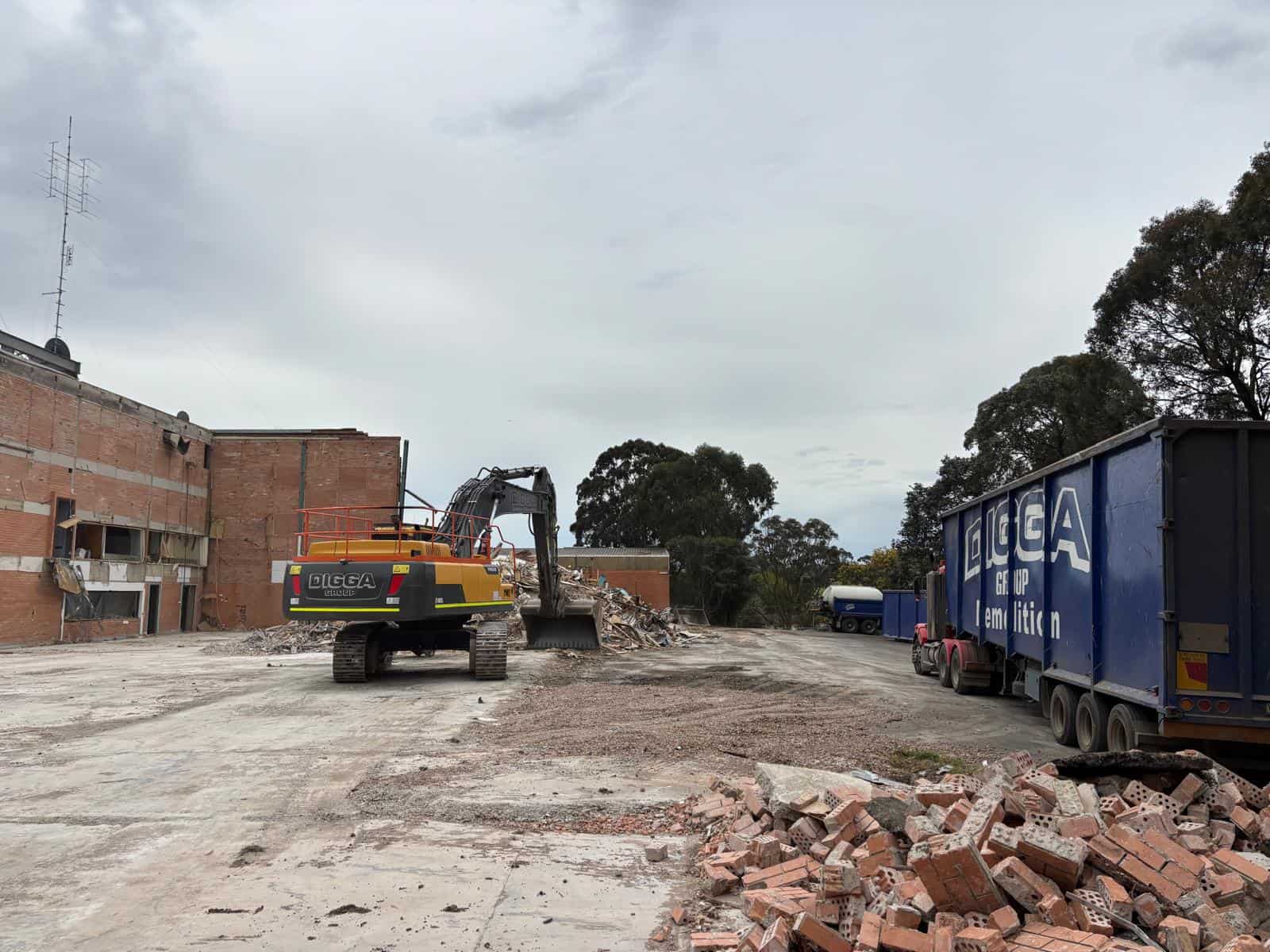
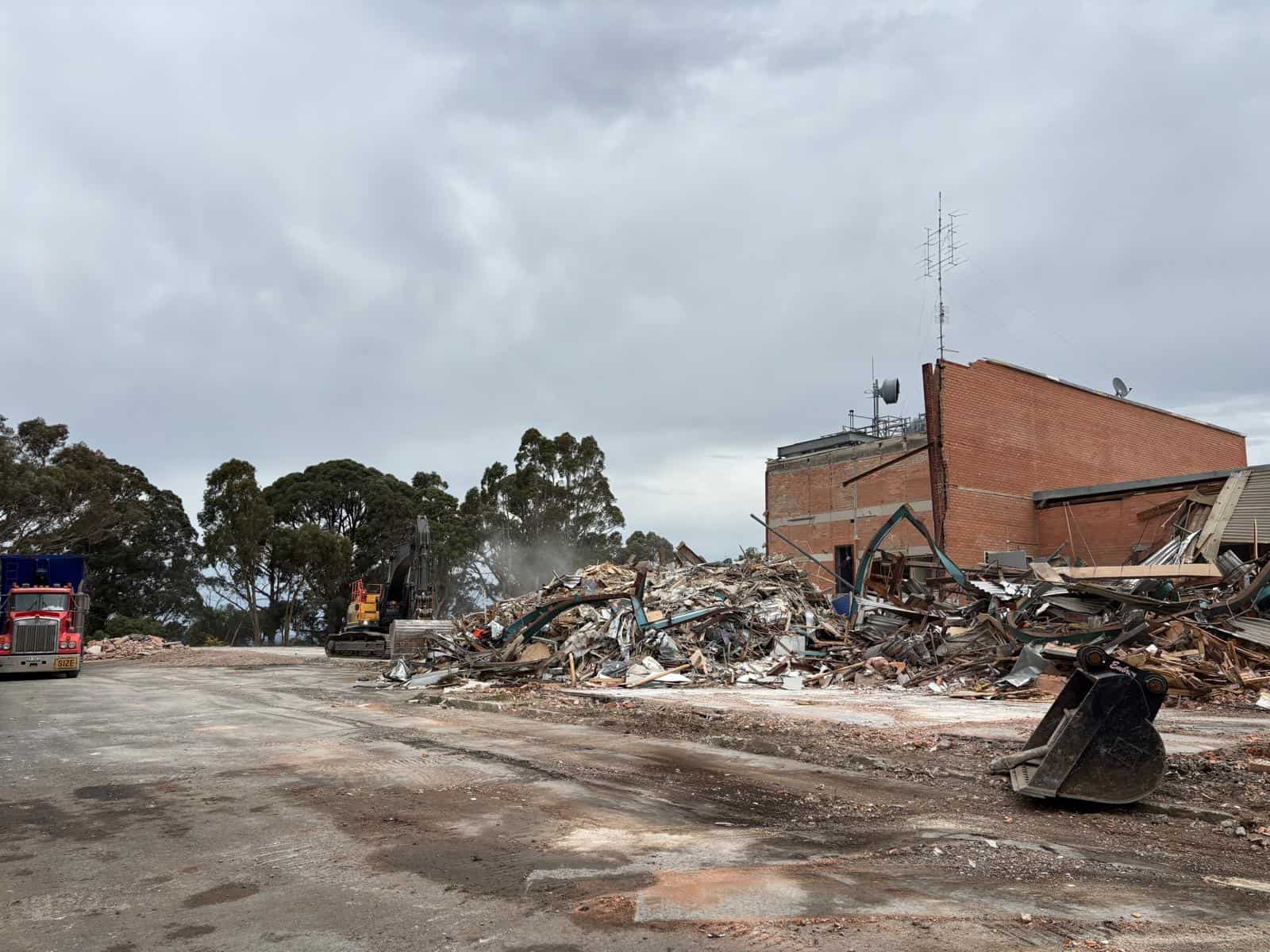
- Structural demolition – Mechanical demolition of the brick studio buildings, administration block and steel-framed sheds using 48-tonne and 25-tonne excavators with demolition attachments.
- Environmental controls – Continuous water-cart dust suppression and controlled site access throughout the works.
- Resource recovery – Segregation of brick, concrete and steel at the point of demolition, with all mixed waste remediated and hand-sorted at the Digga Group EPA-licensed recycling yard.
- Site clearance – Removal of slabs, footings and hardstand, leaving the site clean and level.
Recycling and resource recovery
Sustainability was central to the delivery of this project, with approximately 97% of all material removed from site (excluding asbestos waste) diverted from landfill. Brick, concrete and steel were segregated at the point of demolition. Approximately 2,300 tonnes of brick and concrete were transported to a local quarry and crushing facilities for processing into recycled aggregate, while more than 150 tonnes of structural steel and scrap metal were delivered to metal recyclers.
All mixed demolition waste was transported to the Digga Group yard, an EPA-licensed recycling facility, where it was remediated and hand-sorted to recover timber, metals, brick, concrete and other recyclable materials. Only the small residual fraction of non-recyclable waste, approximately 3% of the total, was sent to landfill. Asbestos-containing material is excluded from these figures and was disposed of separately at an EPA-licensed facility in accordance with regulatory requirements.
Plant and equipment
48-tonne and 25-tonne excavators with demolition attachments, a 1.7-tonne mini excavator, a Vermeer mini loader, a water cart for dust suppression, and a dedicated haulage fleet of semi-tippers, truck-and-quad combinations and bin trucks.
The completed site